"Vanity and pride are different things, though the words are often used synonymously. A person may be proud without being vain. Pride relates more to our opinion of ourselves, vanity to what we would have others think of us."

Saturday, April 24, 2010

Don’t Cry for Wall Street


Last Thursday 22 April 2010, President Obama went to Manhattan, where he urged an audience drawn largely from Wall Street to back financial reform. “I believe,” he declared, “that these reforms are, in the end, not only in the best interest of our country, but in the best interest of the financial sector.”


Well, I wish he hadn’t said that — and not just because he really needs, as a political matter, to take a populist stance, to put some public distance between himself and the bankers. The fact is that Mr. Obama should be trying to do what’s right for the country — full stop. If doing so hurts the bankers, that’s O.K.

More than that, reform actually should hurt the bankers. A growing body of analysis suggests that an oversized financial industry is hurting the broader economy. Shrinking that oversized industry won’t make Wall Street happy, but what’s bad for Wall Street would be good for America.

Now, the reforms currently on the table — which I support — might end up being good for the financial industry as well as for the rest of us. But that’s because they only deal with part of the problem: they would make finance safer, but they might not make it smaller.

What’s the matter with finance? Start with the fact that the modern financial industry generates huge profits and paychecks, yet delivers few tangible benefits.

Remember the 1987 movie “Wall Street,” in which Gordon Gekko declared: Greed is good? By today’s standards, Gekko was a piker. In the years leading up to the 2008 crisis, the financial industry accounted for a third of total domestic profits — about twice its share two decades earlier.

In his Thursday speech, by the way, Mr. Obama insisted — twice — that financial reform won’t stifle innovation. Too bad.

And here’s the thing: after taking a big hit in the immediate aftermath of the crisis, financial-industry profits are soaring again. It seems all too likely that the industry will soon go back to playing the same games that got us into this mess in the first place.

So what should be done? As I said, I support the reform proposals of the Obama administration and its Congressional allies. Among other things, it would be a shame to see the antireform campaign by Republican leaders — a campaign marked by breathtaking dishonesty and hypocrisy — succeed.

But these reforms should be only the first step. We also need to cut finance down to size.

But the fact is that we’ve been devoting far too large a share of our wealth, far too much of the nation’s talent, to the business of devising and peddling complex financial schemes — schemes that have a tendency to blow up the economy. Ending this state of affairs will hurt the financial industry. So?

Wednesday, April 21, 2010

A model of bipartisanship.


let me scream out-loud!

John Paulson, the hedge-fund manager at the center of the Goldman fraud case, is a model of bipartisanship. Not too long ago, he organized a fundraiser for the Republican National Committee. Then he organized one for Sen. Chuck Schumer, the Democrat who's probably most involved in planning and funding the party's senatorial races. "John Paulson supports a variety of candidates in both political parties," explained a spokesman.

But to paraphrase "The Incredibles," saying you support everyone is the same as saying you support no one. This is where our campaign finance system gets so undeniably corrupt: Paulson doesn't simultaneously believe in Chuck Schumer and the RNC. There'd have to be something wrong with you to be an enthusiastic partisan of the Fantastic Four and Dr. Doom (I'm not saying who is who in this analogy) simultaneously.

Rather, Paulson is doing something he's pretty familiar with: hedging. And the investment he's hedging isn't his political support for these actors. It's his access to them. It just wouldn't do for one party to win and freeze him out.

these 2 batard makes more American go jobless and homeless at the same time.

It's bad enough that our campaign finance system makes the rich more important constituents than, well, everyone else. But that's actually the least of its problems. More infuriating is that they system is used qualitatively differently by the rich than by the poor. It would be one thing if the situation was simply that the rich had more money to donate to the candidates that ignited their passion.

But in reality, the motivations of a child-care worker who sends $100 to Barack Obama or Ron Paul and a hedge fund manager who holds fundraisers for both the RNC and Chuck Schumer could not be more different. One is supporting a candidate. The other is investing in access to candidates.Drink, Drunk Drama!

We have, in essence, a two-tiered campaign finance system. And the politicians who benefit from it are no more eager to explain who helped structure their thinking than Goldman Sachs is to explain who helped structure its CDOs.


please click the image for wider view

Graph credit: Wall Street Journal.

My verdict says :
He would be prosecuted not less than 18 month +- in prison and release without Parol and enjoy his remaining life in Golf coast with the money he took from all the poor people! such a batard!

Monday, April 19, 2010

Earth Friendly Tips


Today’s Earth Friendly Tips
  • Find and purchase products that use less packaging.
  • Carpool, use public transportation, walk or bike to work or school.
  • Use less water – take a shower instead of a bath, turn off water while brushing your teeth.
  • Unplug appliances such as toasters, microwaves, even your phone charger when not in use to save energy.
  • Re-program your thermostat a few degrees in the summer and winter (up for air conditioning, down for heating)
The facts are:
I am not into plastics beg, and we only own 1 car and it is hybrid. I used public transportation to go anywhere anytime, or walk.
We shower before taking a bath, and the water we bath is save for water the plant or wash the cloths.
Sometime i has forgotton to unplug and switch off the appliances, but will keep in mind in the future.
We are using the energy safe air conditioning or a fan most of the time.

Saturday, April 17, 2010

Today, after the government-backed bailout of the financial industry and the ruination of the world economy


pls don't try below at home...lol


Let's say you're a bank. You loaned out money to people buying homes. You loaned out money to developers who were building homes. But now you worry that your creditors won't be able to pay you back. What do you do?

One thing you can do is create a "collateralize debt obligation."(CDO)
First, you create a new corporation.
Second, sell all your mortgage loans to this new corporation. This frees you (the bank) from all the risk. How does the new corporation purchase these mortgages? Well, (third), it issues new bonds.
The proceeds from these bonds allows the new corporation to buy the old mortgages. The new bonds will pay interest (and eventually pay back principal) based on the interest generated by the original mortgages.
Now, the new bonds come with different risk categorizations. Some are "equity securities," which means that the bond is essentially purchasing (very risky) ownership in the new corporation. Some are "junior securities," which means they are a bond but a bond which is risky. Some are "senior securities," which means they are a bond but a bond which holds less risk.

Now, the funny thing is, the bonds you just sold are classified by risk. But that risk doesn't have to have anything to do with the riskiness of the mortgages backing the bonds.bleak!!

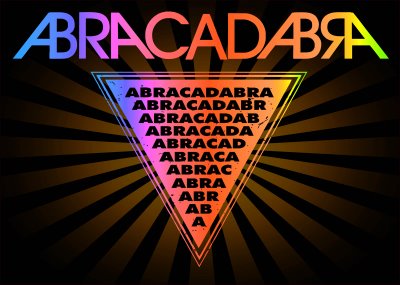
Essentially, the new corporation is saying, "I've got junk over here...ultra super-duper shockingly-high mortgages which are all likely to go bust. But I wave my magic wand, say the magic word, and ABRACADABRA! I now can ignore all that super-duper risk. The bonds I'm issuing are risky, some risk, and low risk."

The law permits this, you know. Why? Because the new corporation can classify the risk of its products any way it wants to. It justifies the ultra-riskiness of its equity bonds by saying, "If the mortgages go bad, you take the hit first."
Thus, the classification of high risk. It justifies the mid-level riskiness of the junior bonds by saying, "All the equity bonds take the hit first. You take a hit second." It justifies the low-level riskiness of the senior bonds by saying, "The equity bonds and junior bonds take the hits first. You come last."

Now, remember: You are the original bank. You can help the new corporation sell these bonds. In fact, you can earn a commission on the sale of these bonds. So not only have you unloaded the bonds onto a new company, but you've sold off your ownership interest in the new company by issuing equity bonds. And now you're making money off the new company by selling its bonds on commission!

Sweeeeeeeet!!right

It can get even sweeter. Let's say you don't want to sell your mortgages to the new corporation. That's cool: Just engage in a credit swap. That is, promise to give the new corporation a percentage of the interest on the mortgages (say, 75 percent). In return, if the mortgage goes into default, it's the new corporation which has to pay you (the bank) for the cost of this mortgage. Essentially, you are trading away most of the profits (the interest) on the mortgage in return for someone else taking the mortgage off your hands when it goes bad.

When you don't actually sell your mortgage, this is called a "synthetic collateralized debt obligation" (synthetic CDO).


Now,

let's say that you (the bank) are a sneaky shit-eating bastard. (I know, it's redundant to call banks sneaky shit-eating bastards. But let's continue with our hypothetical...)

Let's say that you purposefully make loans which you KNOW will crater. And then you create a synthetic CDO which sells off the profits in these mortgages to this purposefully doomed new company. You still get some profit so long as the mortgages perform, but you incur none of the risk. Once the mortgages default, the hapless new company has to take them off your hands -- ensuring that the new company will go bankrupt.

You (the bank) are no longer hedging your bets. Now you are purposefully playing the market, betting against your customer's own best interests. You are purposefully setting up dummy corporations to pay you money, take your bad debts off your hands, and leave unsuspecting creditors holding the bag.

As one securities dealer put it, "You are buying fire insurance on someone else's house and then committing arson."

All legally.

According to the New York Times on December 22, 2009, that's exactly what Goldman Sachs and other Wall Street firms did exactly this from 2005 to 2007.

The market for CDOs in 2004 was $157.4 billion. But that market increase by a whopping 60 percent (to $251.3 billion) in 2005,
and then doubled again in 2006 to a gigantic $520.6 billion.

It receded slightly in 2007 to $481.6 billion as portions of the housing market began to collapse. (The actual numbers are much, much higher because synthetic CDOs are unregulated and trading in them is not reported to any financial regulator, exchange, or market.)

After ruining the country, the CDO market collapsed to just $61.9 billion in 2008, and a paltry $4.2 billion in 2009.

Goldman Sachs and others say they weren't intentionally ruining anyone (f**k yeah). There was just a really big demand for CDOs, they said, so they began packing all the mortgages they had into CDOs -- which meant all the really crappy stuff, too.

But they are lying.

In 2006, two companies -- CDS Indexco and Markit -- created an index stock called the ABX. Investing in this stock allowed traders to bet on CDOs. Holders of CDOs could join the ABX (for a hefty fee) and offer shares in their CDOs. Buyers of the index could trade the shares like any stock.

This included buying and selling options ("puts," which predict the shares will fall and allow the purchaser to buy the stock at some future date at a price at the predicted low price; and "calls," which predict the stock will rise and which allow the purchaser to buy the stock at some future date below the predicted high price).


Goldman Sachs began playing the ABX. Goldman Sachs knew full well the housing market was collapsing.
So not only did it sell off its bad debts in the form of synthetic CDOs, it began trading in ABX "puts" -- ensuring that it could buy stock now at high prices and force others to take the stock off its hand at that high price once the price of the ABX stock had collapsed to worthlessness.

Goldman began doing this in December 2006, although it never informed anyone about the worsening risks involved in the mortgages it continued to make or the CDOs it continued to sell.

So not only was Goldman Sachs making money by dumping its CDOs... Not only was Goldman Sachs making money by marketing CDOs... Not only was Goldman Sachs making money by purposefully creating shitty CDOs... It was also playing the market to make money once those CDOs collapsed.

Then, years later, once those assets -- the actual homes, businesses, and buildings -- were being sold off for pennis to satisfy the debts? Goldman Sachs snatched them up at fire-sale prices.


Today, two years after the government-backed bailout of the financial industry and the ruination of the world economy, the Justice Department and Securities and Exchange Commission filed a lawsuit accusing Goldman Sachs of committing fraud by issuing these CDOs.

Thanks to Tim (Princeton), Credit to people in XXX unit (you know who you are) and Steve,(hubby).

Friday, April 16, 2010

What happened to the economics profession? And where does it go from here?


It’s hard to believe now, but not long ago economists were congratulating themselves over the success of their field. Those successes — or so they believed — were both theoretical and practical, leading to a golden era for the profession. On the theoretical side, they thought that they had resolved their internal disputes.

Thus, in a 2008 paper titled “The State of Macro” (that is, macroeconomics, the study of big-picture issues like recessions), Olivier Blanchard of M.I.T., now the chief economist at the International Monetary Fund, declared that “the state of macro is good.”

The battles of yesteryear, he said, were over, and there had been a “broad convergence of vision.” And in the real world, economists believed they had things under control: the “central problem of depression-prevention has been solved,” declared Robert Lucas of the University of Chicago in his 2003 presidential address to the American Economic Association.

In 2004, Ben Bernanke, a former Princeton professor who is now the chairman of the Federal Reserve Board, celebrated the Great Moderation in economic performance over the previous two decades, which he attributed in part to improved economic policy making.

Last year, everything came apart. bleak!!!!

Few economists saw our current crisis coming, but this predictive failure was overshadow during the "Bloody (Bush) Bastard Administration" if i may call so.

During the golden years, financial economists came to believe that markets were inherently stable — indeed, that stocks and other assets were always priced just right. Yeah i would like to put the blame on Alan Greenspan, there is no such thing as FREE MARKET. You make one winner and the rest falls. Come on, is this what we called an Economists!.


Ain't trust any bankers!, they are not Economists, they are just a mere CAPITALISTS, or rather TYRANT CAPITALISTS.

There was nothing in the prevailing models suggesting the possibility of the kind of collapse that happened last year. Meanwhile, macroeconomists were divided in their views. But the main division was between those who insisted that free-market economies never go astray and those who believed that economies may stray now and then but that any major deviations from the path of prosperity could and would be corrected by the all-powerful Fed (Federal Reserve ) Neither side was prepared to cope with an economy that went off the rails despite the Fed’s best efforts.

And in the wake of the crisis, the fault lines in the economics profession have yawned wider than ever. Lucas says the Obama administration’s stimulus plans are “schlock economics,” and his Chicago colleague John Cochrane says they’re based on discredited “fairy tales.” In response, Brad DeLong of the University of California, Berkeley, writes of the “intellectual collapse” of the Chicago School, and I myself have written that comments from Chicago economists are the product of a Dark Age of macroeconomics in which hard-won knowledge has been forgotten.

What happened to the economics profession? And where does it go from here?


As I see it, the economics profession went astray because economists, as a group, mistook beauty, clad in impressive-looking mathematics, for truth.

Until the Great Depression, most economists clung to a vision of capitalism as a perfect or nearly perfect system. That vision wasn’t sustainable in the face of mass unemployment, but as memories of the Depression faded, economists fell back in love with the old, idealized vision of an economy in which rational individuals interact in perfect markets, this time gussied up with fancy equations.

The renewed romance with the idealized market was, to be sure, partly a response to shifting political winds, partly a response to financial incentives. But while sabbaticals at the Hoover Institution and job opportunities on Wall Street are nothing to sneeze at, the central cause of the profession’s failure was the desire for an all-encompassing, intellectually elegant approach that also gave economists a chance to show off their mathematical prowess.

Unfortunately, this romanticized and sanitized vision of the economy led most economists to ignore all the things that can go wrong. They turned a blind eye to the limitations of human rationality that often lead to bubbles and busts; to the problems of institutions that run amok; to the imperfections of markets — especially financial markets — that can cause the economy’s operating system to undergo sudden, unpredictable crashes; and to the dangers created when regulators don’t believe in regulation.

It’s much harder to say where the economics profession goes from here. But what’s almost certain is that economists will have to learn to live with messiness. That is, they will have to acknowledge the importance of irrational and often unpredictable behavior, face up to the often idiosyncratic imperfections of markets and accept that an elegant economic “theory of everything” is a long way off. In practical terms, this will translate into more cautious policy advice — and a reduced willingness to dismantle economic safeguards in the faith that markets will solve all problems.


Sunday, April 11, 2010

Soul Train -closer I get to you.


The closer I get to you
The more you'll make me see
By giving me all you've got
Your love has captured me

Over and over again
I try to tell myself that we
Could never be more than friends
And all the while inside
I knew it was real
The way you make me feel

Lying here next to you
Time just seems to fly
Needing you more and more
Let's give love a try

Sweeter than sweeter love grows
And heaven's there for those
Who fool the tricks of time
With the hearts in love they find
True love
In a special way

The closer I get to you
The more you make me see
By giving me all you've got
Your love has captured me

Over and over again
I try to tell myself that we
Could never be more than friends
And all the while inside
I knew it was real
The way you make me feel

The closer I get to you
The more you make me see
By giving you all I've got
Your love has captured me

The closer I get to you
A feeling comes over me


Saturday, April 3, 2010

The little one-our Princes.

Our daughter, Sophie Stephen S.


She was allowed to visit me yesterday, she is so excited and tell me that she wants to become a doctor, when she is grown up. lol!

Gosh ! That will costs me a fortunes . Steve's darling, we need to buy an education insurance thou!


did she missed me?, no she said. Nana as she is referring to Steve's Mom is around to entertain her! but she cried when the visiting time has ended.

When will i see you again? she asks me. ...i smile and hug her.

OK,!

and it is officially Springtime in NY. We have few cherry trees here, but not many as in Washington DC though! but nevertheless.


Something to cheer me up. Steve took the above, which is our housing area, next to the central park and he insists that i put in the blog.

So until than, you will hear me again

buh bye